BEAT AIR POLLUTION
ELIYA NYONGA JANIKILA (Tanzania)
Honorable Mentions
Pollution refers to the process of making the environment’s components dirty. This can be done by adding pollutants into water, soil and air in various ways of life practiced by human and animal in the environment. Pollution can be in the form of energy and chemical substances such as noise, heat and light.
Therefore, there are various major forms of pollutions which include, water pollution, soil pollution, light pollution, noise pollution, land pollution, air pollution and others depending on the context and aspect specifically on the particular environments (Coker, 1990).
Air pollution refers to the release and discharge of pollutants into the air that are harmful to human health and the planet at large. This caused by a mixture of unwanted solid particles called aerosols and gases in the air. According to Al-timimi & Khraibet, (2017), the particles and gases are unwanted because they are harmful and even poisonous at times. These are caused by substances that hold the potential pollutant which hinder the wellbeing of living things and the atmosphere.
Air pollution mostly comes from the use and production of energy that eventually leads to the release of particulates and chemicals in the atmosphere. These chemical includes nitrogen oxides and the chlorofluorocarbons produced by motor vehicles and industries that are harmful to both human, plants and the whole globe (Barreira et al., 2017).
The air pollution is caused by different activities such as;
Volcanic eruption, dust storms and forest and grassland fire which produces harmful gases to air such as carbon dioxide, carbon monoxide sulfur dioxide and hydrochloric acid.
Excessive mining activities; whereby minerals below the earth surface are extracted, during the process chemicals and dust are released in the air causing excessive pollution.
The exhaust from industries which release a large amount of harmful emissions such as carbon monoxide, carbon dioxide and methane in the air there by depleting the quality of air. Also mobile sources like motor vehicles, marine vessels, aircraft which produces much carbon dioxide, carbon monoxide and sulfur dioxides (Thomas, 2013).
The excessive use of fire wood as fuel in household for cooking and the production process of charcoal itself is deadly to our environment due emission of gas like carbon monoxide, carbon dioxide, Sulphur dioxide and nitrogen dioxide (Sinha, 2018).
The presence of air pollution, encountered effects directly or indirectly to human beings and the environment at large;
The health damage, this is where by individuals encounter respiratory, cardiovascular and heart problems. The bronchitis worsens leads to asthma, heart attack, lungs cancer and sometimes death. This occurs when the tiniest and smallest air bone particles like smog to people who work or exercise outside penetrate to the throat, lungs and blood streams. The depletion of the ozone layer too, emits the harmful rays back on earth and cause skin related problems, due to the presence of chlorofluorocarbons in the atmosphere (Mark et al., 2018).
Ozone depletion, tropospheric ozone affects health of living organisms because it is toxic. When the ozone depleting substances reaches the stratospheric ozone affects the ozone that allows Ultraviolet light to reach the earth and lead to cancer, eye cataracts, damage sensitive crops and reduce yield (Thangavel, 2018).
Acidic rain; caused by burnt fossil fuel, when fall as rain and snow or dry gas/particulates lead to trees damage and cause soil and water bodies to acidify making water unsuitable for fish and wildlife.
Last but not least the above mentioned effect can lead to the following consequences of Air pollution.
Climate change; the increase in greenhouse gases to air has led to increase in unsuitable temperature. This result in impact to human health, agriculture, water resources, forests, wildlife, coastal areas and whole globe (Endeshaw et al., 2018) .
Low life expectance and mortality; the effects lead to decrease in average time expected to live for living and increased death this cause reduction of labour productivity due to impacts on labour market.
Eutrophication, gases entering the air like nitrogen dioxide contaminate and concentrate in water. Therefore, stimulate the bloom of algae which cause killing of fishes and loss of plants and animal diversity.
The impact of air pollution is dangerous to both plant and animals. This create a reasons why we should reduce air pollution such as to maintain and secure the human health and their well-being. This will help to maintain and nurture wildlife’s habitat, to enforce and enhance receiving rains that are acidic free and better air quality lead to a significant extension of lifespan
Clean air ensures sufficient beating of air pollution because there are number of reasons why we should reduce air pollution since clean and fresh air is people’s right
Environmentalists and policy makers should formulate good air conservation policies that discourages air pollution and ensures proper implementation of policies particular to individuals who attempt to go against and endanger the wellbeing of the air
Also educating people on the possible causes of air pollution, the possible effects to the environment as well as the importance to participate firm in preventing air pollution and enhancing a good environment with clean air
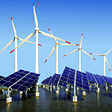
To avoid emission of harmful gases to air by making use of alternative energy sources such as the use of wind energy, solar energy, gas and electricity instead of charcoal and firewood
Planting trees such as mangrove which are good absorber and filter of gases like carbon dioxide
Maintaining industries and vehicles to reduce the amount of greenhouse gases emitted into the air
Therefore, it is each individual’s obligation to participate in beating air pollution in their own part and context. This enhances hand in hand progress and development in economic, political and social aspects for the wellbeing of human being and nature.





 |
| 
 0
0







0 Comments